Signs of Termites in the House
- Pencil-width mud tubes on the foundation or a garage wall
- Piles of discarded wings on windowsills
- Paint that bubbles on a baseboard or trim
- Wood that sounds hollow when tapped
- A swarm of winged insects near a window
Subterranean Termites
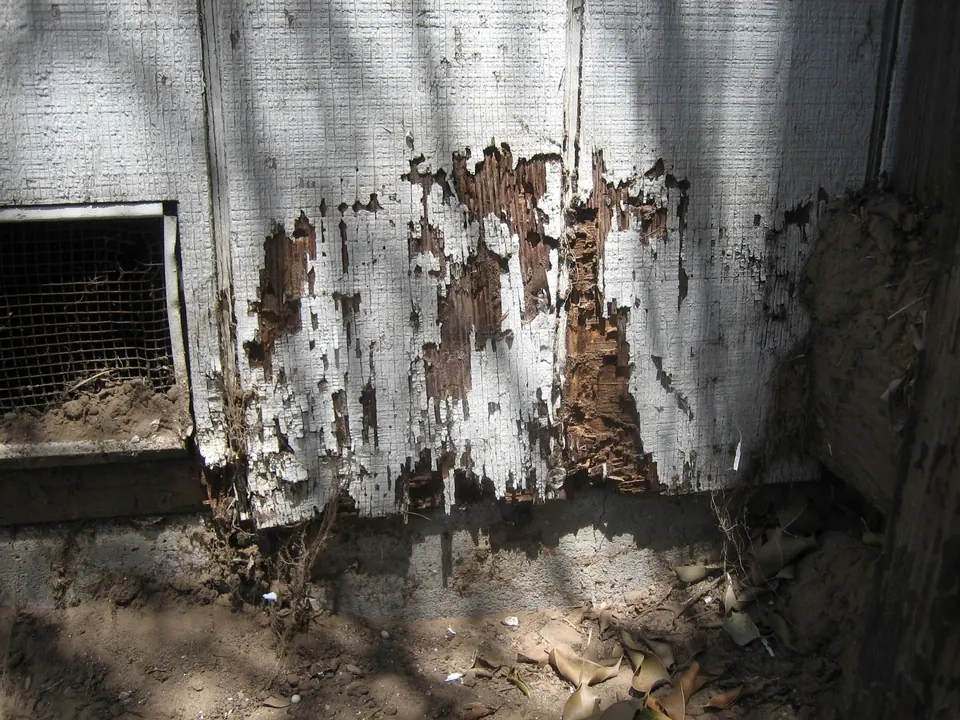
Most termite damage in homes comes from subterranean termites. They nest in the soil and move up through slab cracks, expansion joints and plumbing penetrations.
Because they stay hidden in mud tubes, damage often shows first in door frames, window sills and wood that touches the soil.
Mud tubes are the clearest sign of subterranean termites, and they often hide behind boxes stored in the garage.
Termite Inspection and WDI Reports for Home Sales
Buyers, sellers and lenders often ask for a termite inspection during a sale. The findings are recorded on an official Wood Destroying Insect Report, usually called a WDI report.
The report notes visible evidence of termites and conducive conditions such as wood-to-soil contact or mulch packed above the slab line.
Termites or Flying Ants?
Termite swarmers have straight antennae, a thick waist and wings of equal length. Flying ants have elbowed antennae and a pinched waist, and a clear photo settles it.
Termite Questions
Are termites common around houses?
Yes. Subterranean termites are widespread. They live in the soil and travel into homes through cracks and mud tubes to feed on wood.
What are the signs of termites in a house?
Look for pencil-width mud tubes on the foundation or walls, discarded wings near windows and doors, wood that sounds hollow or crumbles, bubbling paint, and small swarms of winged insects indoors.
I saw a swarm of winged bugs inside. Are they termites?
Maybe. Termite swarmers have straight antennae, a thick waist and two pairs of equal-length wings that break off easily. Flying ants have elbowed antennae, a pinched waist and front wings longer than the back ones. A swarm indoors is a good reason to have the home looked at.
What does a termite look like?
Worker termites are small, soft-bodied and creamy white, with no visible waist. They are rarely seen in the open because they stay inside wood, soil or mud tubes.
Do termites bite people?
No. Termites are not a health threat to people. The concern is the damage they do to wood in the structure.
Can termites eat drywall or pressure-treated wood?
Termites feed on cellulose. They can chew through the paper facing on drywall to reach wood, and treated lumber resists them but is not a complete barrier.
Do I need a termite inspection to sell my house?
It is often requested during a sale, and some loans require one. Real estate termite inspections are recorded on an official Wood Destroying Insect Report form.
What is a WDI inspection?
WDI stands for Wood Destroying Insect. A WDI inspection looks for visible evidence of termites and other wood destroying insects, plus conditions that attract them, and the findings are recorded on the official WDI report form.
Do I need a termite inspection on a new house?
New homes can still attract termites because the insects come from the soil. A termite inspection documents the condition of the house and points out things like wood-to-soil contact.
Termite swarm or mud tubes on the slab?
Call (512) 200-8685